










 Capital Markets
Competition & Regulatory
Corporate / M&A
Data Protection & Privacy
Employment & Benefits
Energy & Infrastructure
Family Owned Business & Private Wealth
Investment Management
Litigation & Risk Management
Public & Administrative Law
Real Estate
Restructuring & Insolvency
Tax
Tech & Commercial Law
Capital Markets
Competition & Regulatory
Corporate / M&A
Data Protection & Privacy
Employment & Benefits
Energy & Infrastructure
Family Owned Business & Private Wealth
Investment Management
Litigation & Risk Management
Public & Administrative Law
Real Estate
Restructuring & Insolvency
Tax
Tech & Commercial Law

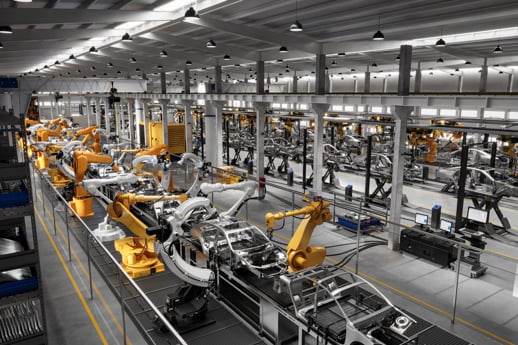
The European automotive sector is undergoing its most significant structural shift in a generation. OEMs, suppliers, and mobility platforms are navigating a recalibrated EV transition, the rise of new manufacturers and partnerships, the Industrial Accelerator Act and "Made in Europe" regulations, tariffs and evolving trade agreements, supply chain pressure on semiconductors and critical materials, and a strategic pivot toward defence manufacturing. At the same time, value is migrating along the chain toward software-defined vehicles, autonomous technology, and the tech partners that supply them.

Loyens & Loeff advises clients across the automotive value chain on the tax, regulatory, and transactional consequences of these shifts. Our integrated teams across the Netherlands, Belgium, Luxembourg, and Switzerland combine sector experience with depth in EU law, cross-border structuring, transfer pricing, customs and international trade, M&A, and capital markets – positioning us as a trusted adviser where strategic decisions carry simultaneous tax and legal implications.


Building on years of international efforts to adapt tax rules to an increasingly digitalised economy, the OECD/G20 Inclusive Framework has reshaped the global tax landscape through its two pillar solution.
As part hereof, the OECD/ Inclusive Framework released the Pillar Two Rules at the end of December 2021, resulting in a 15% minimum tax rate for in-scope (multinational) groups in all jurisdictions where they have presence as early as of financial years 2024. These rules are by now introduced in many jurisdictions, imposing a global minimum tax and significantly expanding compliance and reporting obligations for (multinational) groups.
While the OECD has finalised the technical framework for Pillar One, implementation of Amount A remains uncertain due to the absence of global consensus. Amount B, by contrast, is incorporated in the OECD Transfer Pricing Guidelines and can be applied by jurisdictions to determine a return on sales for in-scope distributors.
On 4 June 2026, the Luxembourg direct tax authorities (“LTA”) updated their frequently asked questions (“FAQ”) on the Luxembourg Pillar Two legislation.
EU REIT cross-border investments face tax challenges as fragmented regimes undermine single taxation; ECJ case law and Pillar Two highlight key gaps.

In recent years tax authorities have placed more emphasis on combatting the use of abusive and aggressive tax structures by companies operating across borders, to ensure fair taxation. The EU and OECD have provided tax authorities with various instruments such as the Anti-Tax Avoidance Directive (ATAD) and the Multilateral Instrument. The judgements handed down by the CJEU on the Danish cases have also set an important precedent.
However, since entities with no minimal substance and economic activity are supposedly still used for improper tax purposes, the European Commission recently issued a new proposal (ATAD 3). It is highly recommended that taxpayers already assess the possible impact of the proposal and consider opportunities for strengthening their local footprint and/or restructuring.
A recent Belgian court decision confirms that royalty payments for the use of a trade name may be tax deductible where they serve a genuine business purpose, without requiring proof of a quantified benefit.
As the year comes to a close, this Snippet provides an update on certain directives previously covered in that series.

Sustainability is becoming an increasingly important factor in the decisions of investors, companies, consumers, shareholders and policy and law makers. The broadly supported awareness of Environmental, Social and Governance (ESG) objectives is reflected in many international voluntary standards as well as in an increasing number of European regulations.
ESG expectations are increasingly shaping the Swiss legal and regulatory landscape.
EU institutions have set out a joint political and operational roadmap to reinforce the EU’s Single Market and strengthen Europe’s global competitiveness.