

 3 minutes read
Objectives and key findings of the Report
The Report finds that the WAMCA appears successful in its central ambition to prevent a claim culture similar to the US and a proliferation of interest organisations and claims filed. Fewer actions were initiated under the WAMCA than under the pre-WAMCA regime and to date no cases have had to be dismissed based on an insufficient link with the Dutch legal sphere.
One of the WAMCA’s core ambitions was to create a more coordinated, efficient and effective system for class actions. To achieve this, the WAMCA introduced a new procedural regime with a distinction between the preliminary and material phase of the proceedings. The Report finds, however, that this preliminary phase takes a significant amount of time.
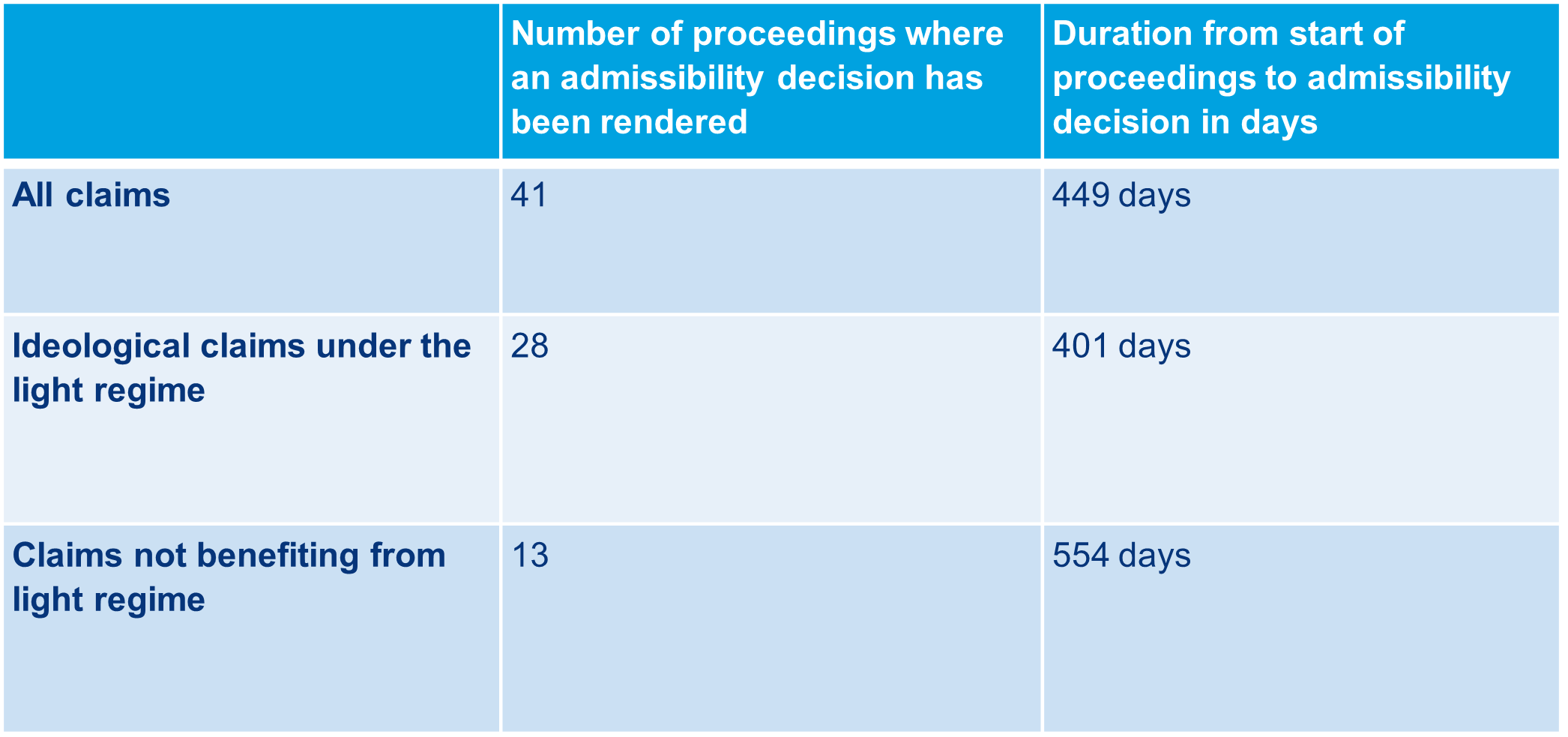
Below is a table of findings from the Report, showing the average duration of the preliminary phase. The table shows that the preliminary phase is long in all cases. Cases in which the interest organisation benefits from the lighter admissibility regime (included in the WAMCA for certain ideological claims involving no monetary damages) progress significantly faster, however, than those which do not.
The Report also acknowledges that the preliminary phase is necessary to help ensure that only credible, well-organised representative organisations can bring class actions. However, the Report suggests that the rigidity of the WAMCA and the consequent duration of proceedings threaten its effectiveness and accessibility. The Report finds a broad consensus among practitioners that the preliminary phase should be made more efficient, though disagreements remain on the best ways to achieve that goal.
The above findings suggest that the WAMCA already generally performs well for ideological claims: the Report shows that these cases proceed significantly faster than regular WAMCA cases. The light admissibility regime thus appears to be effective already at reducing the complexity and length of a significant share of class actions. Considering upcoming developments and potential clarifications (as discussed below), the WAMCA may solidify its position as a valued tool for public interest litigation in the coming years.
Opportunities for speeding up the preliminary phase?
The Report discusses several suggestions from practice to ‘speed things along’.
- Patience. Many of the bottle necks in the preliminary phase stem from uncertainty and divergent case law. The Report expects that several elements will be resolved through future case law, leading to faster and more predictable admissibility decisions over time.
- Codify shortcut for repeat players. Moreover, some claimants have instituted multiple claims under the WAMCA, but have to clear the admissibility hurdle independently every time. The Report suggests that it could be efficient to allow decisions on the governance and transparency of such organisations in one case to stand in other proceedings.
- Skip the settlement phase. A key goal of the WAMCA was to encourage settlements. The Report finds, however, that the drawn-out preliminary phase has the effect of taking away the incentive for parties (especially defendants) to settle early: defendants may instead wait to see if a claimant organisation is admissible before engaging in settlement discussions. The Report notes that, to date, only in two cases settlements have been reached (in both cases before the preliminary phase ended). A possible improvement might be to allow the court discretion in timing the mandatory settlement stage or to skip it altogether.
Challenges for third party litigation funders
Under the WAMCA, many mass damages claims are supported by commercial third-party litigation funders. A third-party litigation funder pays for the legal costs of a claimant in return for a share of a potential future damages award, bearing the risk that the claimant loses the case and no damages are awarded. The involvement of litigation funders with a commercial objective shows the importance of safeguards ensuring that control over the claim remains primarily with the claimant organisation.
For litigation funders, the lengthy preliminary phase poses challenges. The long duration makes funding a claim less attractive by increasing costs and risks and putting pressure on returns. The Report highlights that only cases with high potential returns are likely to attract funding. The Report finds this undermines the WAMCA’s original aim to provide access to justice for such claims.
Since no cases have reached the stage of distribution of damages yet, some of the WAMCA’s safeguards are untested in practice. For example, it remains unclear what constitutes an acceptable return for a litigation funder. Furthermore, uncertainties around the role of the litigation funder (for example about the confidentiality and content of the litigation funding agreement) contribute to the length of proceedings. The Report suggests that industry standards and best practices or a model funding agreement may help solve this issue.
The WAMCA is still very promising
We believe that the main take away from the Report should not be the length of the preliminary phase, but rather that the WAMCA is still in its infancy.
These first six years of the WAMCA were characterised by slow procedures, debates on sometimes relatively minor procedural points, and significant uncertainty for both claimants and defendants. The Report rightly notes many issues that require clarification.
That clarification is on the way. Several important procedural questions have been brought to the Dutch Supreme Court or the European Court of Justice, including the temporal applicability of the WAMCA, complex jurisdictional questions, and the interaction between the WAMCA and the GDPR. The answers to these questions will provide clarity and set precedents for others to follow, streamlining debates on these topics.
Get in touch
Our team is closely monitoring the developments concerning class actions and related litigation risks. For more information on class actions in the Netherlands, please contact our Dutch class actions team.