Background
The EU’s sustainability framework has seen significant turbulence throughout 2025. After the EU Commission introduced two Omnibus packages in February, one Omnibus to ‘stop the clock’ to postpone key reporting deadlines for the Corporate Sustainability Reporting Directive (CSRD) and Corporate Sustainability Due Diligence Directive (CSDDD), and a second Omnibus aimed at reducing compliance burdens by at least 25%, the legislative process quickly became a battleground for competing priorities (please be referred to our earlier publication). The Council adopted its Final Position in June 2025 (please be referred to our earlier publication), but momentum stalled in October when the EU Parliament unexpectedly withdrew its support for trilogue negotiations (please be referred to our earlier publication), reopening fundamental debates on the scope and ambition of the reforms. The EU Parliament adopted its final position in November 2025 (please be referred to our earlier publication).
Intense negotiations followed, culminating in a last-minute provisional agreement between the EU Legislator on 9 December 2025 (the Final Omnibus). This Final Omnibus text, as formally endorsed today on 16 December 2025 by the EU Parliament sets the stage for a new phase in EU sustainability regulation: one that promises simplification and reduced administrative burden but also raises critical questions about the future direction and effectiveness of the EU’s corporate sustainability agenda.
This blog is based on the official Final Omnibus text as published by the Council of the EU and formally endorsed today by the EU Parliament on 16 December 2025. While minor technical adjustments may still follow, the analysis below provides an overview of the key principles and obligations as they currently stand.
The Final Omnibus text of the CSRD
Companies in-scope under the CSRD
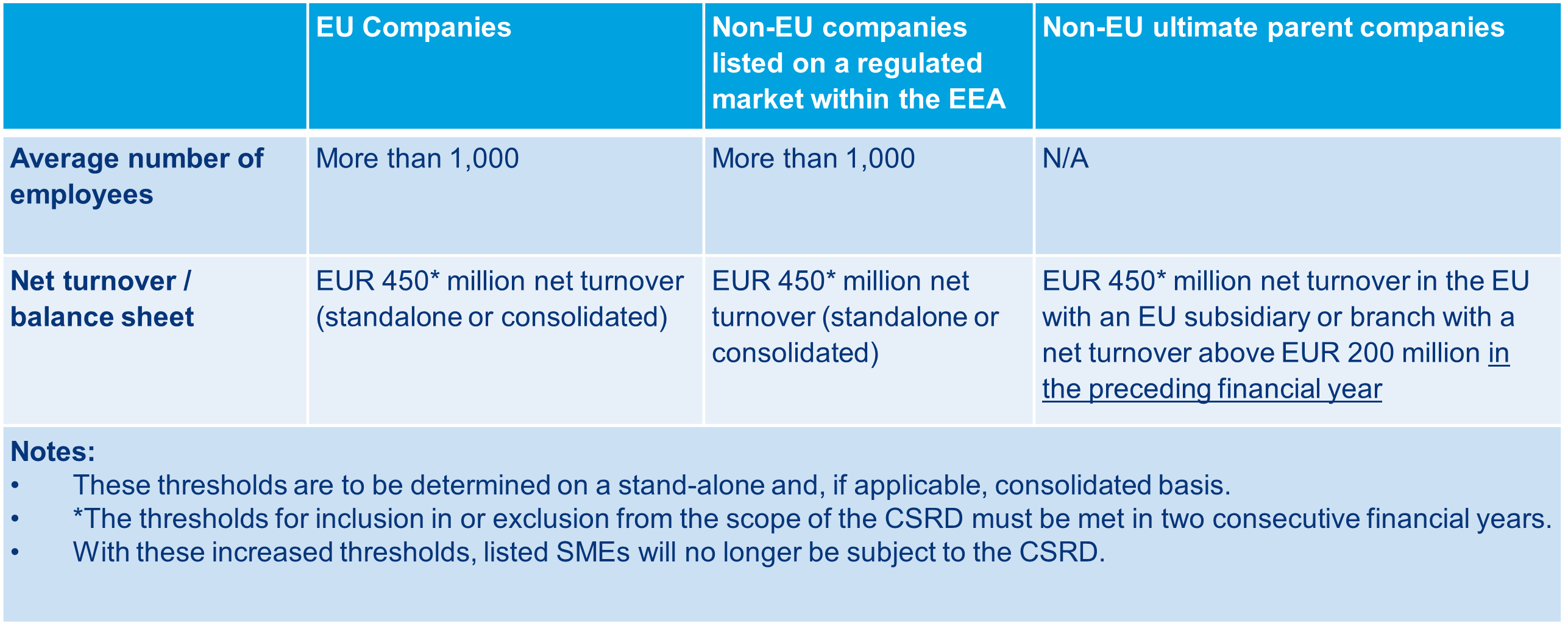
The Final Omnibus significantly narrows the scope of the CSRD to the type of undertakings set out in the table below. The value chain cap is set at 1,000 employees, and there are new, explicit protections for smaller suppliers. Financial holding undertakings with diverse, independent subsidiaries are now exempt from consolidated reporting.
The Final Omnibus text of the CSDDD
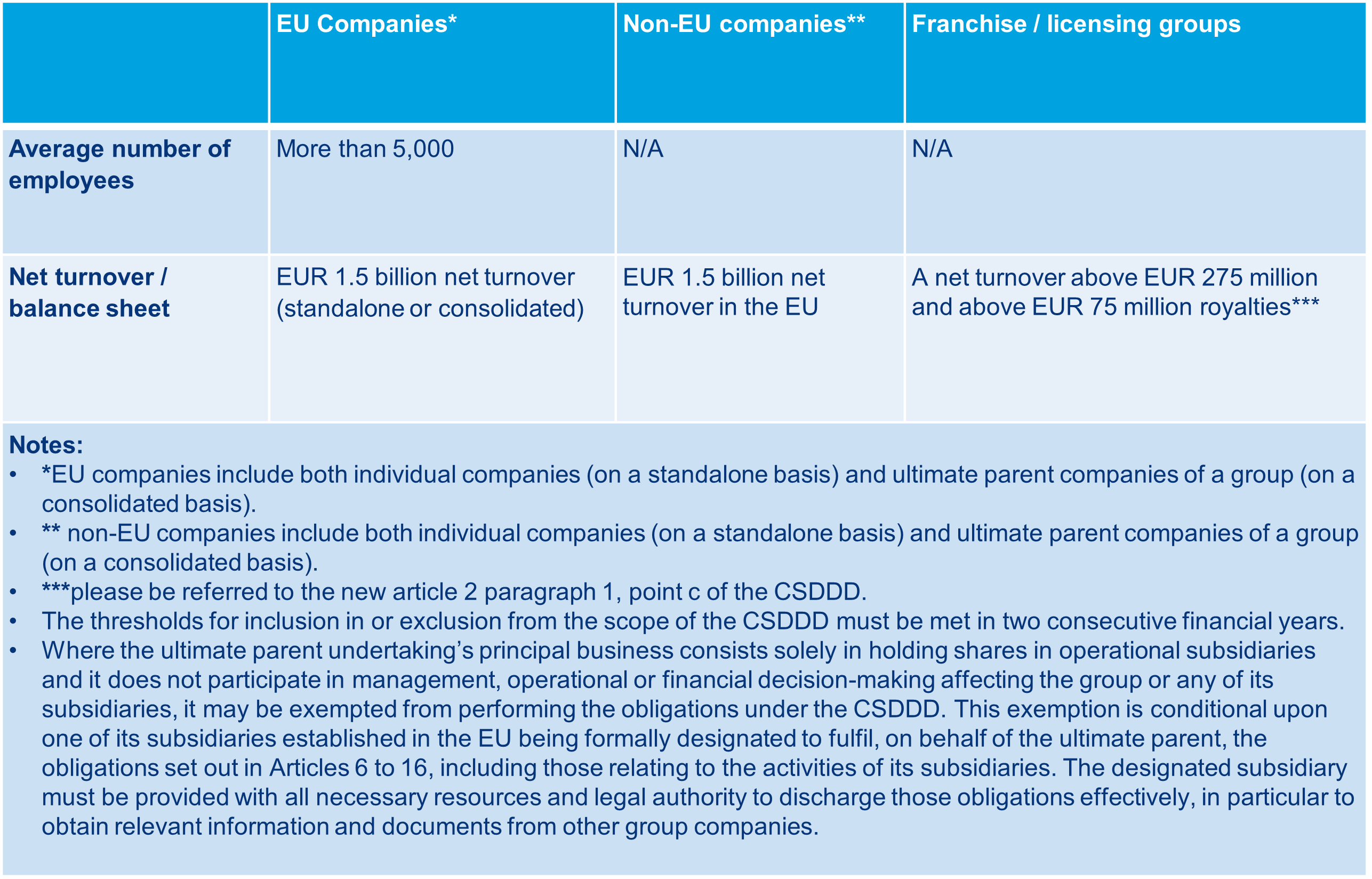
Under the final comprise text of the CSDDD, the thresholds of the CSDDD have been narrowed down.
Companies in-scope under the CSDDD
What’s next?
With the Final Omnibus agreed upon, the legislative process enters its closing phase. The Omnibus Final Omnibus will enter into force on the twentieth day following its publication in the Official Journal of the EU and EU Member States will have 12 months to transpose it into national legislation. In the coming months, further guidance from the EU Commission is expected, particularly on enforcement, penalty calculation, and practical implementation. Companies should start assessing internal processes, reporting systems, and chain-of- activities management in light of the new requirements.
At the same time, the Omnibus remains under legal and political scrutiny. For example, the EU Ombudsman’s finding of 25 November 2025 that the Commission bypassed key Better Regulation steps – such as impact assessments and stakeholder consultations – may not invalidate the Omnibus, but it raises questions about transparency and predictability in EU lawmaking. This could lead to calls for additional safeguards or even litigation against the EU Commission, although such actions are complex and separate from the legislative timeline and implementation of the Final Omnibus.
Get in touch
As ESG legislation and litigation continue to evolve rapidly, our firm is closely monitoring these developments and the potential liability risks for companies. For tailored advice or further information about the implications of the CSRD, CSDDD, or the Final Omnibus, please feel free to contact one of our colleagues below.