Energy Investment Allowance
Increase of percentage
The Dutch government proposes increasing the Energy Investment Allowance (EIA) percentage from 40% to 45,5% as of 1 January 2027.
The EIA provides an additional deduction for investments in qualifying energy-efficient assets and sustainable energy technologies. According to the explanatory memorandum, the increase is intended to strengthen investment incentives and support businesses in reducing energy consumption and improving resilience in response to energy market volatility.
Energy tax
Temporary energy tax compensation for greenhouse horticultural sector
As part of the Dutch government's decarbonisation strategy for the greenhouse horticulture sector, the currently reduced energy tax rates for the sector are being gradually phased out between 2025 and 2035. At the same time, the input exemption for natural gas used in combined heat and power installations is being restricted, and the sector is expected to be brought within the scope of ETS2 through the opt-in mechanism.
The ETS2 opt-in will also result in the greenhouse horticulture sector becoming subject to the proposed green gas blending obligation as of 1 January 2027. To offset these additional gas costs, the government proposes a temporary cut of the reduced energy tax rates in 2027 and an extension of the reduced rate regime to gas consumption of up to 10 million m3 (which currently only applies for gas consumption of up to 1 million m3).
Water tax
Increase in water tax rate
The increase in the water tax rate forms part of a broader package of amendments proposed and adopted during last year’s Budget Day. As of 1 January 2027, water tax will be due on all supplies of tap water of drinking quality, while the existing 50.000 m3 levy cap will be abolished.
The Dutch government is now proposing to further increase the water tax rate by EUR 0.10 per cubic metre.
CO2 levies
Amendment to the CO2 levy for the waste sector
As part of the broader revision of the waste-sector tax package, the Dutch government proposes to moderate the previously announced increase of the industrial CO₂ levy for waste incineration installations (see our Budget Day 2025 post). While the long-term objective remains unchanged, the increase will be phased in more gradually in order to provide the sector with additional time to invest in decarbonisation measures, including carbon capture and storage (CCS). The government also proposes to slow down the reduction of the AVI correction factor, which determines the amount of free emissions available under the Dutch CO₂ levy regime.
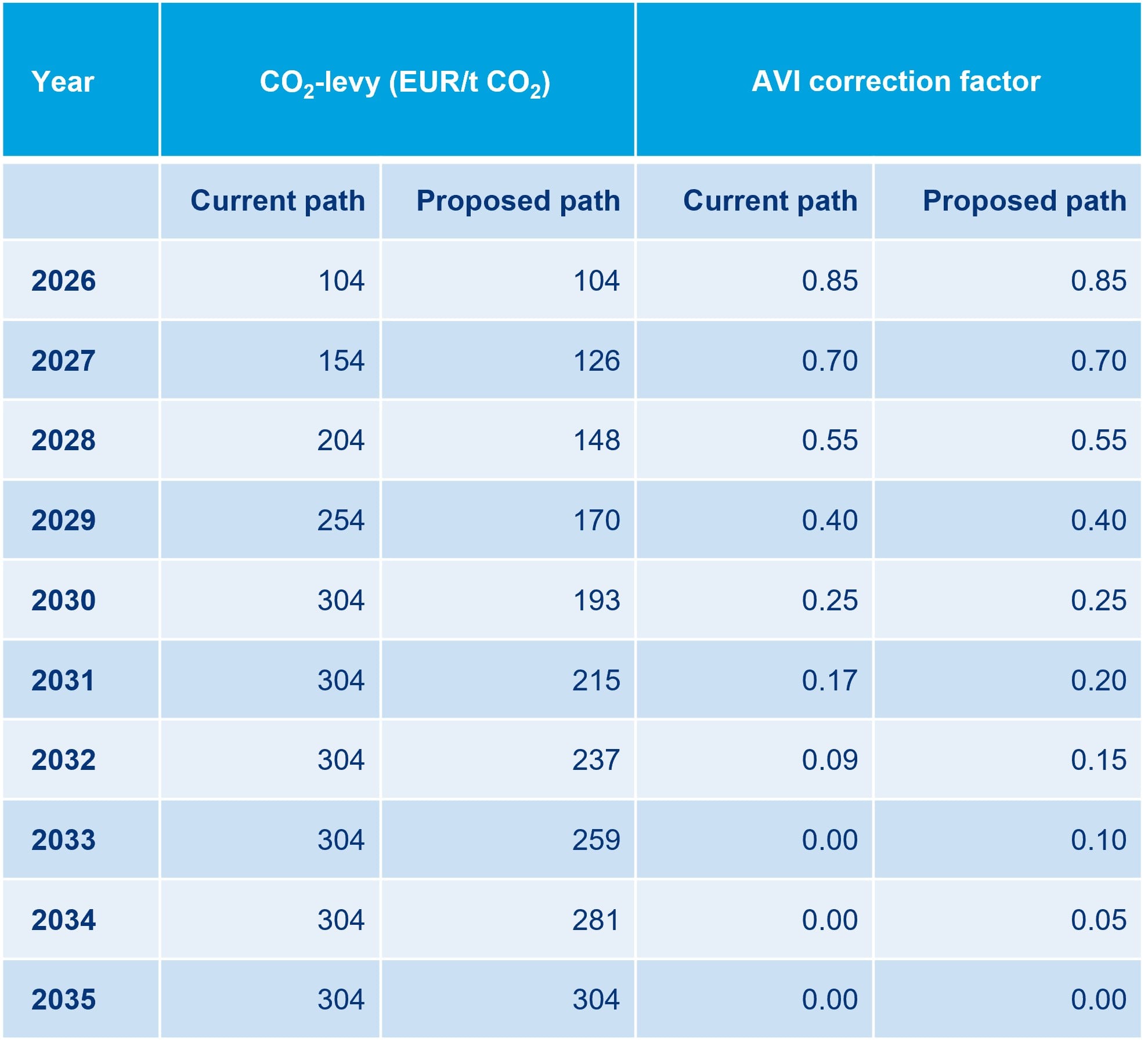
The explanatory memorandum also notes that the European Commission has proposed bringing waste incineration installations within the scope of the EU Emissions Trading System (EU ETS). Should that proposal be implemented, further amendments to the Dutch CO₂ levy may become necessary. The government therefore explicitly recognises that additional adjustments cannot be excluded in the future.
For the related changes to the waste tax trajectory, reference is made to the Waste Tax section below.
Technical amendment of the CO2 levy horticultural sector
A technical amendment is proposed in relation to the CO₂ levy for greenhouse horticulture. The amendment clarifies that where greenhouse horticulture activities are carried out through a partnership or other unincorporated entity, the partnership or unincorporated entity itself is considered the taxpayer. According to the explanatory memorandum the proposal merely clarifies the existing intended treatment and should not result in substantive changes to the amount of levy due.
Flight Tax
Lower rate for long-distance flights
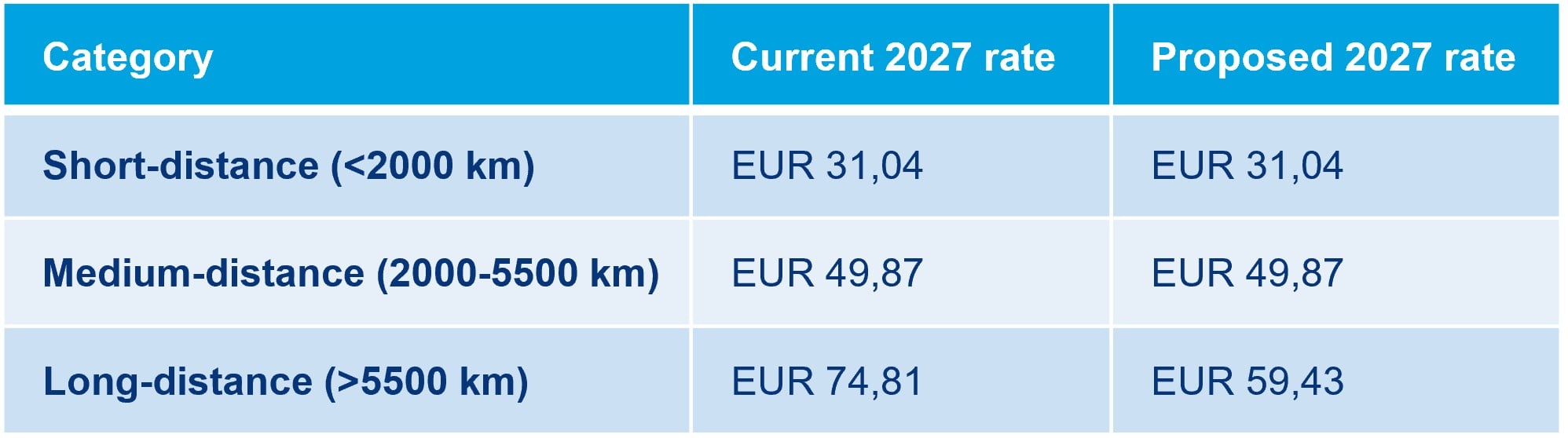
As of 1 January 2027, the Dutch flight tax will become distance based. Under the differentiated system, passengers travelling to most intercontinental destinations will be subject to the highest rate of flight tax. The government now proposes reducing this highest rate to improve the competitive position of Dutch airports compared with neighboring jurisdictions. The government stated that the principle of a distance-based flight tax remains unchanged.
The envisaged rates (indexed for 2027 prices) are as follows:
Change of passenger definition
The government also proposes a technical amendment concerning the determination of a passenger’s final destination. Under the current rules, the final destination is generally determined by reference to the transport agreement. However, in situations where no transport agreement exists (such as certain private flights) the final destination may be evidenced through the flight plan. This amendment aims to avoid automatic application of the highest flight tax rate in situations where no transport agreement is available.
Waste tax
Lowering of waste tax rate
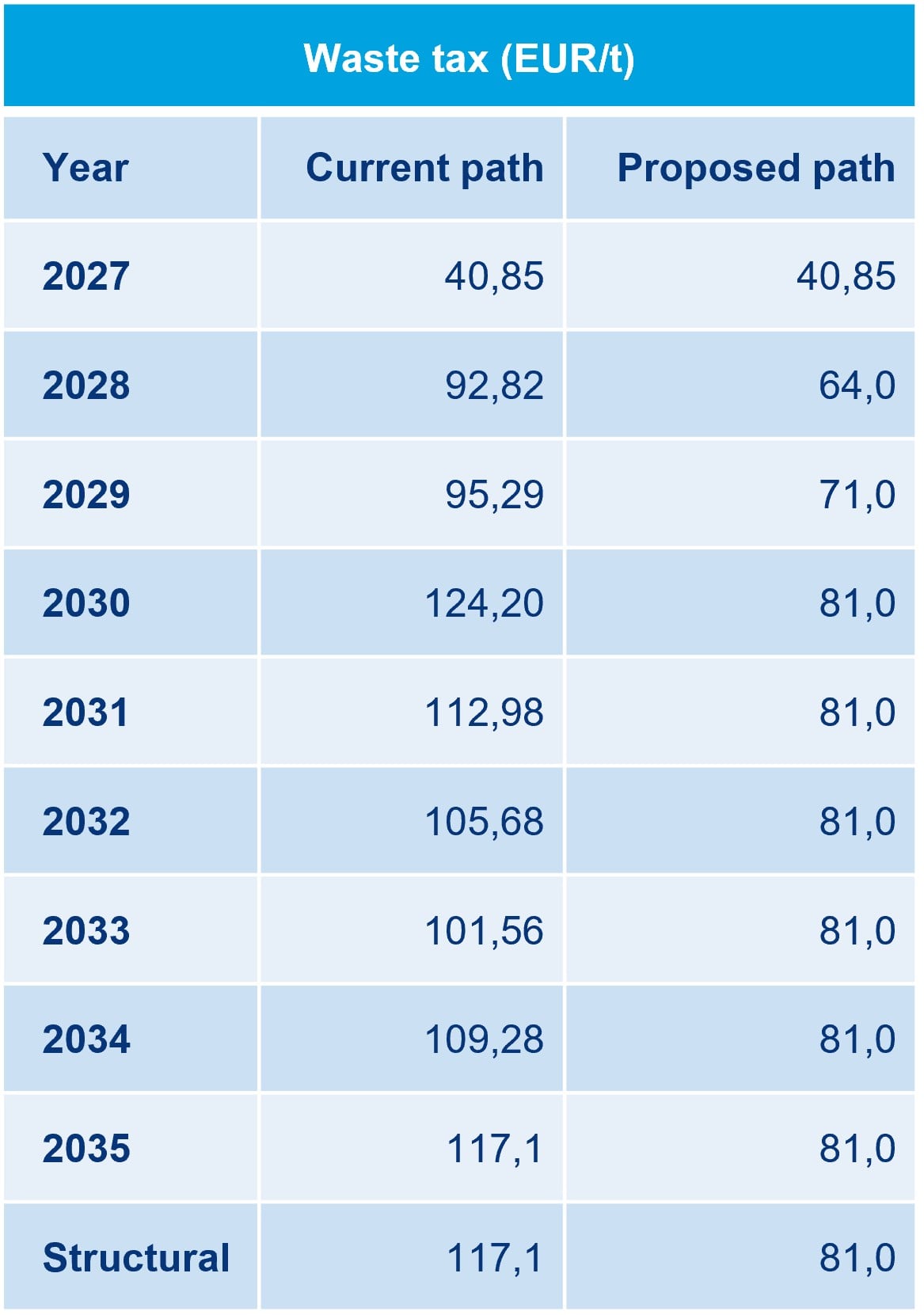
Following concerns raised by the waste sector, the Dutch government proposes to partially reverse the waste tax rate increase introduced during the 2025 Budget Day. The planned rate of EUR 92.82 per tonne in 2028 and EUR 117.10 per tonne from 2030 onwards will be reduced to EUR 64.00 per tonne in 2028, gradually increasing to EUR 81.00 per tonne from 2030 onwards.
Update Waste Shipment Regulation references
A small technical amendment updating the references in the Dutch Environmental Taxes Act from the former Waste Shipment Regulation (EC No 1013/2006) to its successor, Regulation (EU) 2024/1157. The amendment is not expected to materially change the application of the waste tax rules.
CBAM
Further implementation of EU CBAM legislation
Following the operationalisation of the EU Carbon Border Adjustment Mechanism (CBAM) as per 1 January 2026, the Dutch government has proposed additional legislation to further embed the regime into Dutch law by codifying key compliance obligations, introducing a legal basis for information sharing between the Dutch Emissions Authority and the Dutch tax authorities, and aligning the Dutch penalty regime with recent amendments to the CBAM Regulation.
Excise duties
Abolition of the refund scheme for biofuels and renewable fuels
The government proposes abolishing the excise duty refund scheme for biofuels and renewable fuels as of 1 January 2027. The scheme was originally introduced to compensate for the lower energy content of renewable fuels compared to fossil fuels.
According to the explanatory memorandum, the scheme has become increasingly complex in practice, while the fiscal benefit remains limited and the number of applications is low. The government considers the relevance of the scheme to have diminished, as the deployment of biofuels and renewable fuels is increasingly driven by European and national regulatory obligations rather than fiscal incentives.