

 3 minutes read
The emergence of green leases
The concept of a “green lease” is commonly used to describe a lease containing a set of clauses imposing obligations on the landlord and/or the tenant aimed at managing and reducing the environmental impact of a building.
The environmental performance of buildings is no longer solely a matter of design, materials or certification. Driven by the combined effect of ESG requirements applicable to investors, sustainable finance constraints and growing expectations of tenants, environmental clauses (or green lease clauses) are gradually becoming standard in commercial leases.
A market evoluton rather than a legal requirement
To date, Luxembourg law does not provide for a specific legal regime defining or regulating “green leases”. The trend is primarily contractual, driven by a rapidly evolving European regulatory environment. While these rules do not directly impose a specific lease model, they create a framework that makes closer cooperation between landlord and tenant necessary in order to meet transparency and performance requirements.
For investors subject to non‑financial reporting obligations, energy performance has become a key valuation criterion. Yet this performance largely depends on the tenant’s behaviour: energy consumption management, fit‑out works, and internal sustainability policies. It therefore becomes necessary to reflect these items in the lease itself.
The scope of environmental clauses: an evolving contractualisation of performance
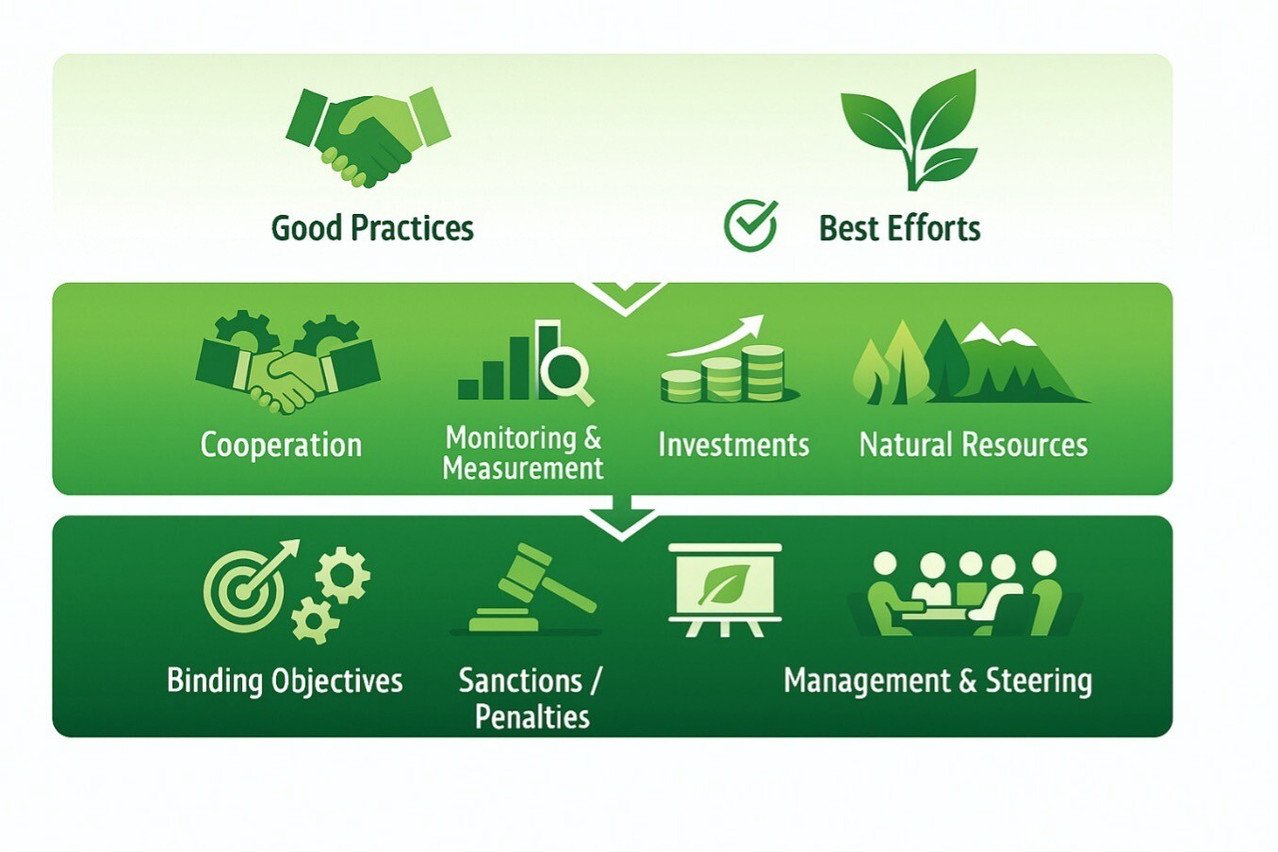
In practice, environmental clauses take various forms (the “green spectrum”), including:
Preserving asset value: a key economic consideration
A building that is energy‑inefficient or misaligned with ESG standards is likely, over time, to suffer a green discount upon resale or refinancing. Conversely, a high‑performing asset benefits from easier access to sustainable financing, increased attractiveness for ESG‑conscious tenants, and enhanced value and liquidity at exit.
In this context, the lease becomes a tool for managing environmental risk, ensuring that inappropriate tenant behaviours do not undermine the overall ESG compliance of the asset.
According to a survey conducted by LuxReal and published in September 2025 (LuxReal_SurveyReport_Short_Web.pdf), 78% of respondents reported increased integration of and/or demand for ESG criteria within their organisations.
An additional constraint for tenants?
From the tenant’s perspective, improving energy performance can reduce operating costs and enhance its ESG profile. However, certain obligations (reporting requirements, technical restrictions, or financial participation in works) may be perceived as an additional burden.

Negotiations therefore focus on the proportionality of comments, their allocation between the parties, and the economic impact of the measures contemplated.
Financing “green” orks: a central balancing assue
The financing of environmental works remains one of the most sensitive topics. Three main approaches can be observed:
– structural works borne by the landlord, treated as long‑term investments;
– operational measures borne by the tenant, linked to its use of the premises; and
– hybrid models, based on contractual cost‑sharing or incentive mechanisms.
Another key issue concerns the adoption of evolving standards. Can a tenant be bound by future, undefined criteria? Market practice tends to address this through carefully framed adjustment clauses, objective thresholds, compliance timelines and review clauses coupled with a duty to renegotiate in good faith.
In the event of non‑compliance, the parties generally favour graduated remedies (cure periods, remediation plans, technical expert involvement) rather than automatic sanctions, in order to preserve the cooperative objective.
Towards a new market standard?
While environmental clauses are currently more prevalent in new buildings and institutional portfolios, their adoption is accelerating. Three main factors are driving this trend:
– the strengthening of the European regulatory framework;
– economic pressure linked to energy costs; and
– evolving user expectations regarding ESG.
In the medium term, the market may split between compliant, attractive and liquid assets, and obsolete assets facing downward pressure on rents and valuations.
Professional and commercial leases are therefore increasingly moving beyond their traditional functions to become a tool of environmental governance structuring the landlord–tenant relationship. Environmental clauses reflect a broader evolution of the Luxembourg real estate market and appear set to become an unavoidable market standard.